The Wood
The wood for my spoons always comes from storm damaged trees or waste from urban tree removal. Trees are never harvested for the sole purpose of carving.
The Process
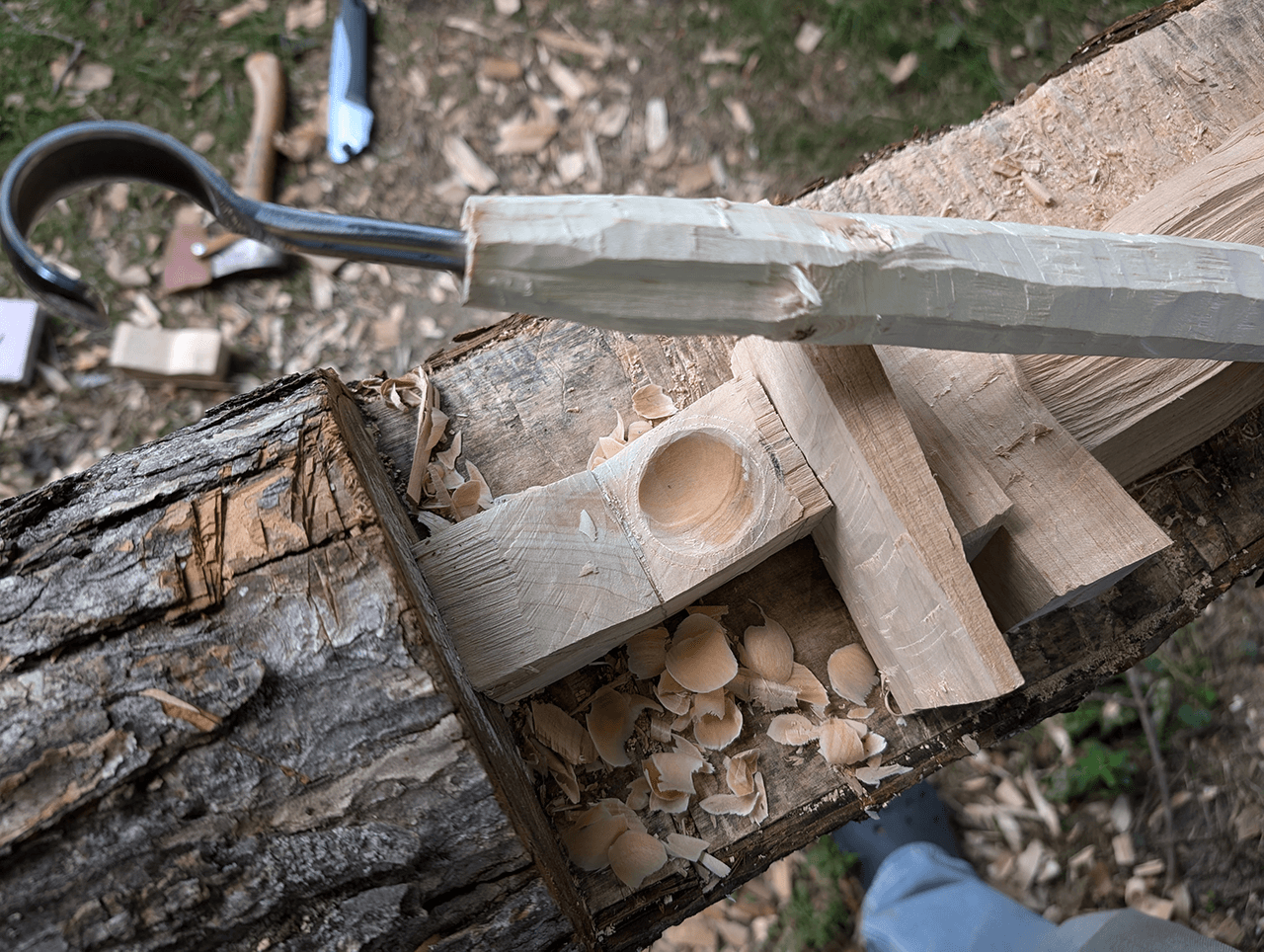
Fresh hardwood logs are cut to length and then split into small, workable pieces called “billets”. The billets are then worked with the axe to the rough spoon “blank” stage. From there, straight and curved knives are used to bring out the final shape of the spoon. The spoon is then left to dry before finishing cuts are made and a layer of food safe oil is applied to bring out the character of the wood.
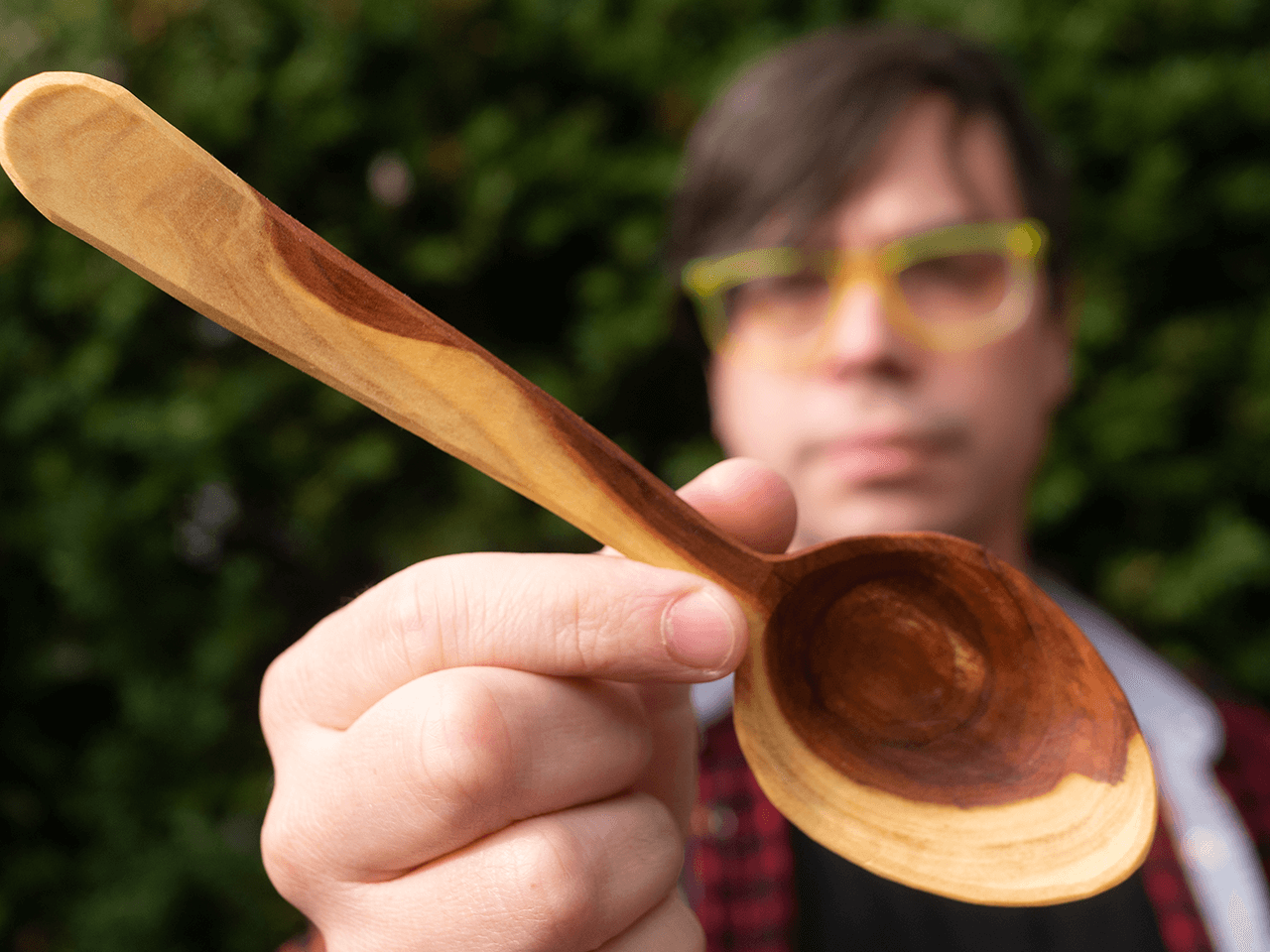
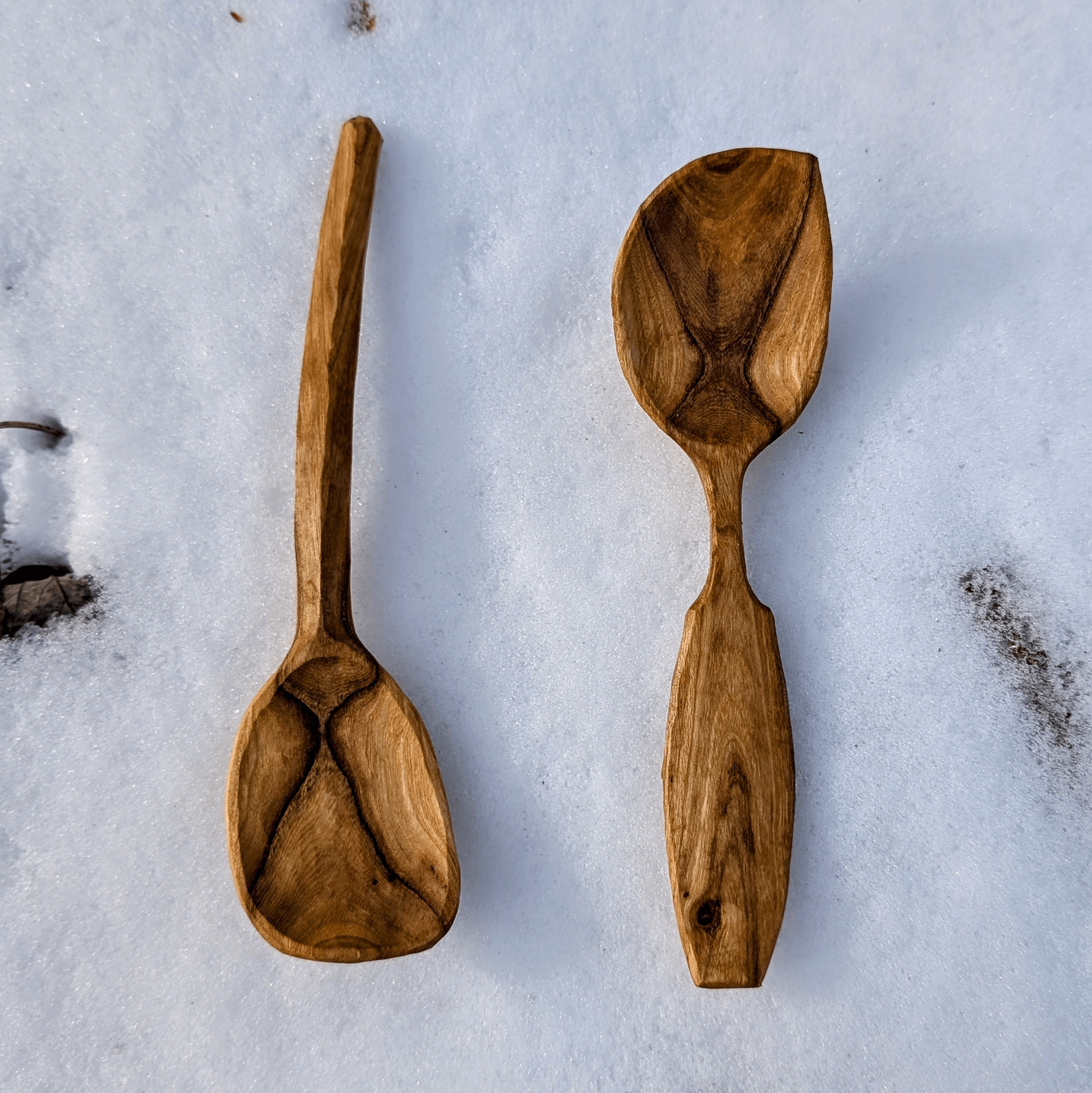
None of the carving is done with power tools and never does a piece of sandpaper touch the wood. All of the shaping and finishing is done with traditional hand blades.
Frequently Asked Questions
How long will my piece last?
I’m still using the first cooking spoon that I ever carved over three years later! Even with daily use, wooden spoons, if properly cared for, will last a long time.
How should I care for my spoon?
Do not put spoons in the dishwasher. A quick wash in warm, soapy water and air drying is the right way to keep your spoon clean. Do not soak woodenware in water or they will oxidize and discolor.
How are the spoons finished?
After drying and performing finishing cuts, the spoons are given a thin coating of 100% walnut oil.
My spoon isn’t as shiny as it once was. Is there anything I can do to bring the shine back?
During use, the oil finish on the spoon is slowly worn away. This does not change the usability of the spoon in any way, but if you want to get some of the initial shine back, you can apply a thin layer of walnut, linseed, or tung oil to a dry spoon and allow it to cure for about a week before using again.
Want one?
Feel free to reach out.
 Case Silva